For anyone new to green coffee beans, the question of Arabica vs Robusta: what's the difference is one of the first and most important things to understand. The two species dominate global coffee production and produce dramatically different cups, and knowing which is which shapes every buying and roasting decision you will make. This blog breaks down Arabica vs Robusta: what's the difference across flavour, altitude, caffeine, growing conditions, and the role each plays in the specialty coffee world, so you can make more informed choices about the green beans you roast at home.
Arabica vs Robusta: What's the Difference? The Basics
Coffee belongs to the Coffea genus, which contains more than 100 species. Commercially however only a handful matter, and two dominate the global market entirely. Arabica, known scientifically as Coffea arabica, accounts for approximately 60 to 70 percent of world coffee production. Robusta, known scientifically as Coffea canephora, accounts for approximately 30 to 40 percent. Everything else, including Liberica and the emerging Stenophylla, makes up a tiny fraction of what is grown and traded globally.
Where Arabica and Robusta Come From
Arabica originated in the highlands of Ethiopia, where wild coffee forests still exist today. From Ethiopia, cultivation spread to Yemen in the 15th century, then via trade routes to India, Indonesia, and eventually Latin America. Today Latin America produces the vast majority of the world's Arabica, with Brazil and Colombia leading global supply.
Robusta originated in sub-Saharan Africa, particularly in the Congo Basin region. It is a hardier, more resilient plant than Arabica and thrives at lower altitudes in hotter, more humid conditions. Vietnam is the world's largest Robusta producer, accounting for approximately 40 percent of global Robusta production. Uganda, Indonesia, and Brazil also produce significant volumes.
Flavour
When home roasters ask Arabica vs Robusta: what's the difference, flavour is usually what they really want to know about. The two species produce dramatically different cups and understanding that difference is essential for choosing the right green beans for your roaster.
Arabica is prized for its flavour complexity, sweetness, and wide range of nuanced cup profiles. Depending on the origin, altitude, variety, and processing method, Arabica can produce cups that range from floral, tea-like, and citric at the light end to chocolatey, nutty, and caramel-sweet at the medium end to bold and bittersweet at the dark end. The range of Arabica varieties and local populations, from Ethiopian landraces to Gesha and SL28, combined with differences in origin and processing, gives Arabica an extraordinarily high flavour ceiling.
Robusta produces a very different cup. It tends toward heavy body, low acidity, and bitterness at commodity grade. At its best, fine Robusta can produce surprisingly complex cups with a distinctive earthy, chocolatey, nutty character. Fine Robusta is a growing specialty category and worth exploring for adventurous home roasters.
Altitude And Growing Conditions
Altitude is one of the clearest practical answers to Arabica vs Robusta: what's the difference in terms of where each species grows. Arabica is a high altitude crop, growing best between 1,000 and 2,000 metres above sea level where cooler temperatures slow cherry maturation and allow sugars and flavour compounds to develop fully inside the bean.
Robusta is a low altitude crop. It grows best below 800 metres in hot, humid conditions that would stress or kill an Arabica plant. This hardiness is one of Robusta's great commercial advantages. It is more resistant to disease, more tolerant of heat and irregular rainfall, and produces significantly higher yields per hectare than Arabica. In a world where climate change is putting increasing pressure on Arabica growing regions, Robusta's resilience is becoming an increasingly important characteristic.
Caffeine Content
Caffeine content is another clear dimension of Arabica vs Robusta: what's the difference. Robusta contains approximately twice the caffeine of Arabica, typically around 2.7 percent compared to Arabica's 1.5 percent. This higher caffeine content serves a natural purpose for the Robusta plant as caffeine is a natural insecticide that deters pests, which partly explains why Robusta is more disease and pest resistant than Arabica.
For coffee drinkers the difference in caffeine content is meaningful. Robusta beans deliver a stronger caffeine hit, which is one of the reasons they are commonly used in espresso blends and instant coffee where strength and caffeine content are priorities.
The Role Of Each In The Coffee Industry
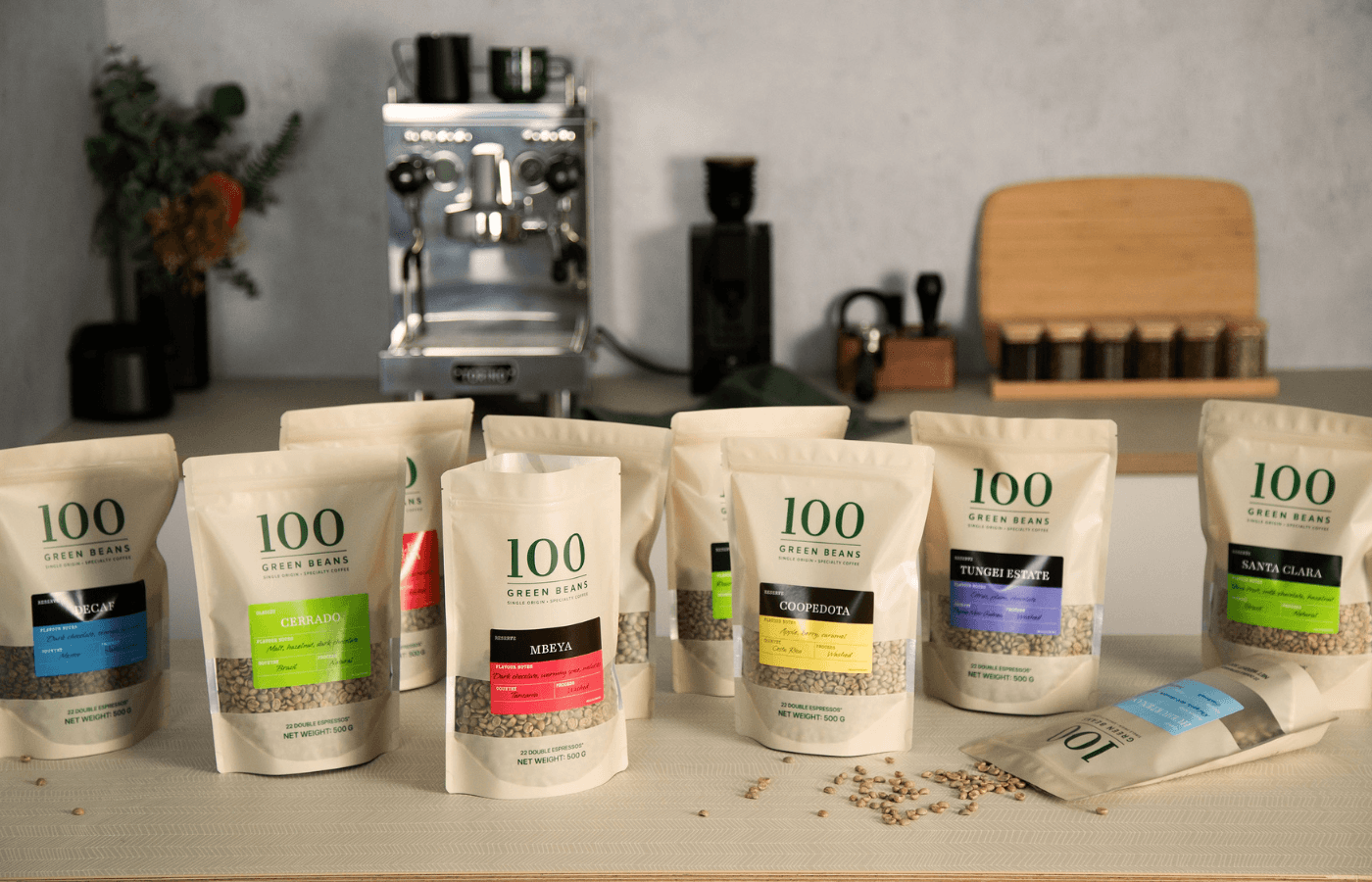
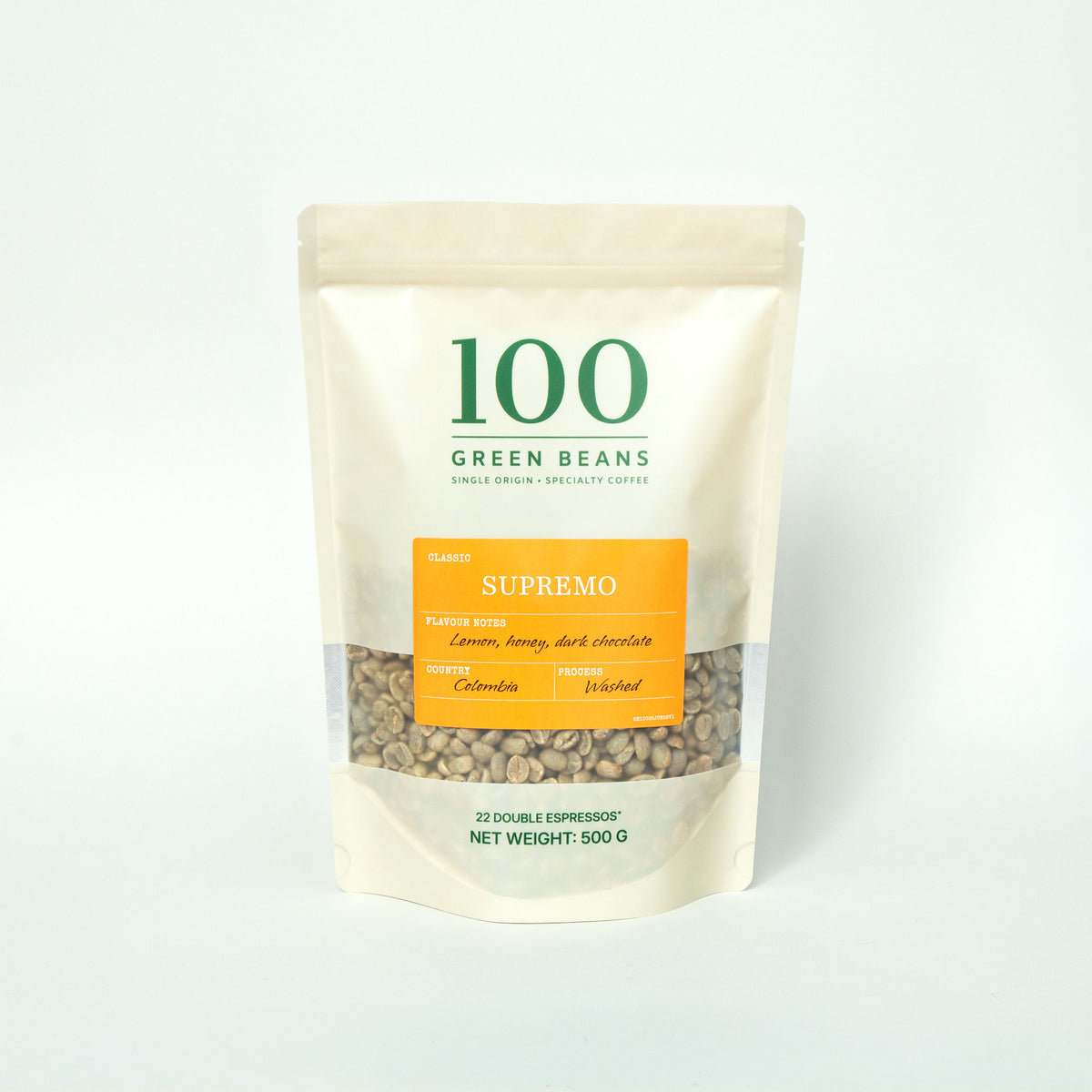
Arabica dominates the specialty coffee world. Almost every green bean sold by specialty suppliers, including the range at 100 Green Beans, is Arabica. The complexity, sweetness, and flavour range of Arabica make it the natural choice for home roasters who want to explore the full potential of what coffee can taste like.
Robusta plays a major role in the commodity coffee market, particularly in instant coffee and many commercial espresso blends. It is the backbone of the global instant coffee market and a key component in many commercial espresso blends, where it is valued for its body, crema, and caffeine content. Fine Robusta is a growing category, with producers in Uganda, Vietnam, and India producing lots of genuine specialty quality, and represents an interesting frontier for curious home roasters.
Which Should You Roast?
For most home roasters the practical answer to Arabica vs Robusta: what's the difference is straightforward. Start with Arabica. The flavour complexity, sweetness, and range of origin characters available within Arabica make it by far the more rewarding and interesting species to explore as you develop your palate and your roasting skills.
Once you have a solid grounding in Arabica origins, branching out into fine Robusta is a genuinely interesting next step. Roasting a high quality Robusta alongside a comparable Arabica and tasting them side by side is one of the most educational things a home roaster can do.
A Final Word
The question of Arabica vs Robusta: what's the difference is foundational knowledge for anyone serious about green coffee and home roasting. Arabica offers complexity, sweetness, and a flavour range that spans the entire spectrum from delicate and floral to bold and chocolatey. Robusta offers strength, resilience, and a distinctive character that has its own place in the coffee world. Both have a role to play, and understanding that role makes you a more informed and capable roaster.
At 100 Green Beans our range focuses on quality Arabica green beans sourced from origins across the Coffee Belt. Browse our full range today and start exploring what Arabica has to offer in your roaster.