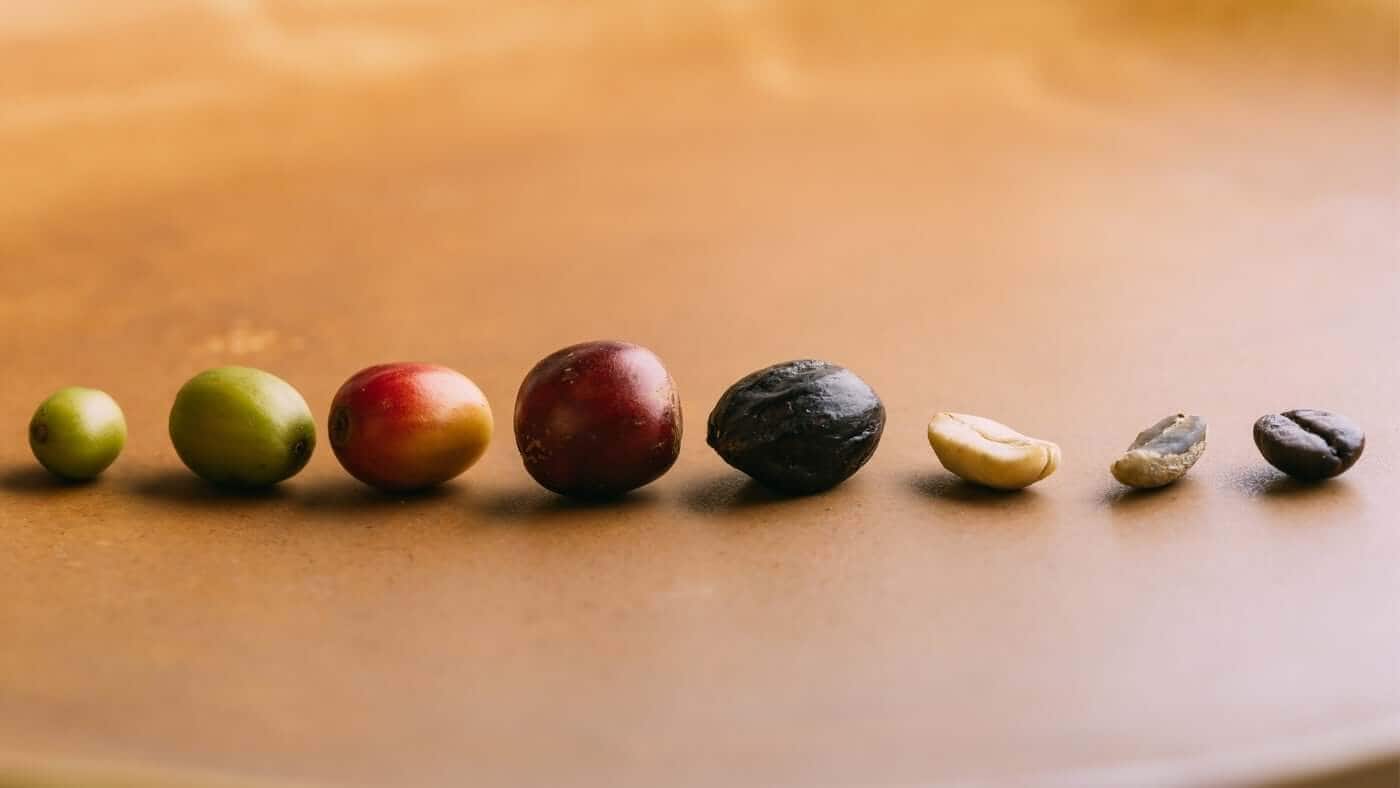
The story of a brief history of coffee and green coffee beans is one of the most fascinating journeys in the history of human culture, trade, and agriculture. From the ancient forests of Ethiopia to the specialty roasters of today, coffee has travelled further, influenced more cultures, and shaped more economies than almost any other agricultural product in the world. Understanding a brief history of coffee and green coffee beans is not just an interesting exercise in curiosity. It deepens your appreciation for every green bean you put in your roaster and connects you to a story that stretches back more than a thousand years. This blog traces a brief history of coffee and green coffee beans from its earliest origins to the modern home roasting movement that 100 Green Beans is proud to be part of.
The Legend Of Kaldi
Every brief history of coffee and green coffee beans begins in Ethiopia. The most famous origin story involves a goatherd named Kaldi who, according to legend, noticed his goats behaving with unusual energy after eating the red berries of a particular plant in the Ethiopian highlands. Kaldi reportedly brought the berries to a local monastery where monks, initially sceptical, discovered that a drink made from the berries helped them stay alert during long hours of evening prayer.
Whether or not the legend of Kaldi is historically accurate, what is certain is that coffee as a plant originated in Ethiopia. Wild coffee forests still exist in the Ethiopian highlands today, and the country remains the ancestral home of Coffea arabica, the species that produces the vast majority of the world's specialty green coffee beans. No other origin can match Ethiopia's genetic diversity or its historical significance in the story of coffee.
Yemen And The Birth Of Coffee Culture
By the 15th century cultivation of the coffee plant had spread from Ethiopia to Yemen, carried across the Red Sea by traders and travellers. It was in Yemen that coffee was first cultivated commercially and where the drink we recognise today truly began to take shape. Sufi monks used coffee to aid concentration during nighttime devotions, and the port of Mocha became the first major coffee export hub in the world, giving its name to the famous Mocha coffee category that still exists today.
Yemeni green coffee beans remain some of the most distinctive and sought after in the world. Grown at high altitudes on ancient terraced farms with minimal water and indigenous varieties found nowhere else, Yemen produces wild, fruity, wine-like cups with a depth and complexity that reflects centuries of cultivation history. The supply is tiny and the logistics are challenging, but for home roasters lucky enough to access Yemeni green beans, the experience is unlike anything else in the Coffee Belt.
The Spread Of Coffee Around The World
From Yemen, coffee spread rapidly across the globe through a combination of trade, colonialism, and cultural exchange. In the 16th century coffeehouses began appearing across the Ottoman Empire, becoming centres of intellectual and social life in cities from Istanbul to Cairo. Coffee reached Europe in the 17th century, where it quickly displaced ale as the drink of choice for morning consumption and spawned a coffeehouse culture that played a significant role in the Enlightenment.
The Dutch were among the first Europeans to cultivate coffee outside of Yemen, establishing plantations in their colonial territories in Java, Indonesia in the late 17th century. Java became one of the most important coffee producing regions in the world and gave its name to a generic term for coffee that is still used today. Indonesian green coffee beans, particularly those from Sumatra processed using the distinctive Giling Basah wet hulled method, remain some of the most characterful and celebrated in the world.
Coffee reached the Americas in the early 18th century. Brazil received its first coffee plants in 1727, introduced by the Portuguese, and within a century had become the dominant coffee producing nation on earth. Brazil remains the world's largest coffee producer today, accounting for approximately 37 percent of global production, and Brazilian green coffee beans are among the most widely roasted and enjoyed by home roasters worldwide.
The Four Waves Of Coffee
A brief history of coffee and green coffee beans in the modern era is best understood through the framework of the four waves of coffee, a concept that traces the evolution of how coffee has been produced, consumed, and valued over the past century.
The first wave was the industrialisation and mass commercialisation of coffee in the late 19th and early 20th centuries. Brands like Maxwell House and Folgers made coffee a household staple, prioritising convenience and consistency over quality. Green coffee beans were sourced at commodity prices with little regard for origin or flavour nuance.
The second wave began in the 1960s and accelerated dramatically with the rise of Starbucks and similar café chains in the 1980s and 1990s. Coffee became a lifestyle product and a social experience. Espresso based drinks, café culture, and branded coffee experiences dominated. Origin still played a secondary role to the café experience itself.
The third wave began around 2000 and transformed the specialty coffee world. Roasters, buyers, and consumers began paying serious attention to origin, variety, processing method, and the relationship between producer and buyer. Green coffee beans were no longer a commodity but a craft ingredient with a story worth telling. Transparency, traceability, and quality became the defining values of the movement.
The fourth wave is the one we are living through now. Home roasting and direct origin engagement are at its heart. Coffee drinkers are no longer content to be passive consumers. They want to understand the green bean, control the roast, and connect directly with the origins and producers behind their cup. This is the wave that 100 Green Beans was built for.
Green Coffee Beans Through History
Throughout a brief history of coffee and green coffee beans it is the green bean itself that has remained constant. Every wave of coffee culture, every trade route, every colonial plantation, and every specialty roastery has been built around the same raw material: the unroasted seed of the coffee cherry, full of potential and waiting for heat to reveal what it is capable of.
Green coffee beans have travelled from the forests of Ethiopia to the terraced farms of Yemen, the volcanic highlands of Guatemala, the high altitude cooperatives of Kenya, and the wet hulling stations of Sumatra. Each origin carries its own chapter of the story, shaped by the people, climate, and culture of the place where it was grown.
Where We Are Today
Today the world of green coffee beans is more diverse, more transparent, and more exciting than at any point in its history. Home roasters have access to origins, varieties, and processing methods that were unavailable or unknown even a decade ago. The tools to roast at home have never been more accessible. And the knowledge base around origin, altitude, variety, and processing has never been richer or more widely shared.
A brief history of coffee and green coffee beans ends, for now, with you: a home roaster with access to green beans from across the Coffee Belt, the knowledge to understand what makes each one special, and the ability to roast them exactly the way you want.
At 100 Green Beans we source and supply premium green coffee beans from quality origins around the world, curated with care and offered with the full story behind every bean. Browse our range today and add your own chapter to the history of coffee