Skip to content

Climate and Coffee: Why Where a Bean Grows Shapes Everything in the Cup

Picture this: You've found a bean you like the sound of – Ethiopian, Grown at 1,900 metres, described as floral and fruity with a bright, clean finish. You order it, it arrives, you roast it, and it tastes exactly like that. Next, you try a different Ethiopian bean from the same altitude and same region. And it's wilder, fuller, jammy and fermented, and almost wine-like. You didn't change the origin. You didn't change your roast. So, what happened?


Processing happened. And once you understand it, you'll never look at a bean description the same way again.

100 Green Beans AU

The Coffee Belt

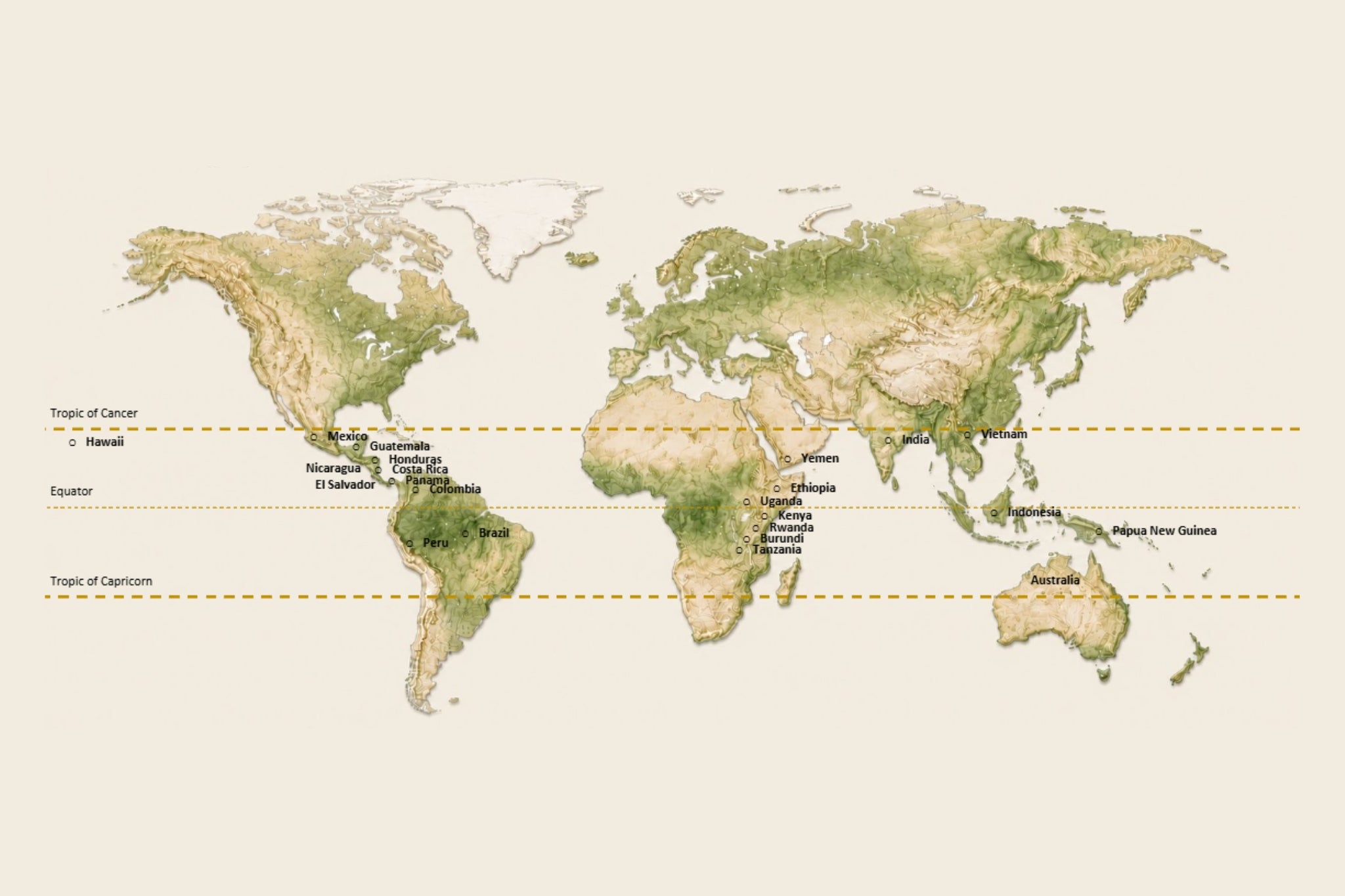
Almost all the world’s coffee is grown in a broad band around the equator, roughly between the Tropic of Cancer to the north and the Tropic of Capricorn to the south. This region - commonly called the Coffee Belt or Coffee Zone - covers parts of Central and South America, Africa, the Middle East, and Asia-Pacific.

What these regions share is a combination of conditions that Arabica coffee needs to thrive: warm but not hot temperatures, consistent rainfall with a defined dry season, rich soil, and - crucially - altitude. Outside this band, the climate is either too cold, too dry, too hot, or too variable to sustain quality coffee production at scale.

Within the belt, the differences are enormous. A Colombian coffee from the Andes tastes nothing like an Indonesian coffee from Sumatra. A Tanzanian bean from the slopes of Mount Kilimanjaro is a different proposition entirely from a Brazilian bean grown on vast flatlands at relatively low elevation. Same belt, completely different cups - because the specific combination of variables within each origin is unique.


100 Green Beans AU

Altitude: One of the Biggest Drivers

If you had to pick one variable that most consistently predicts coffee quality and flavour complexity, altitude would be a strong candidate.

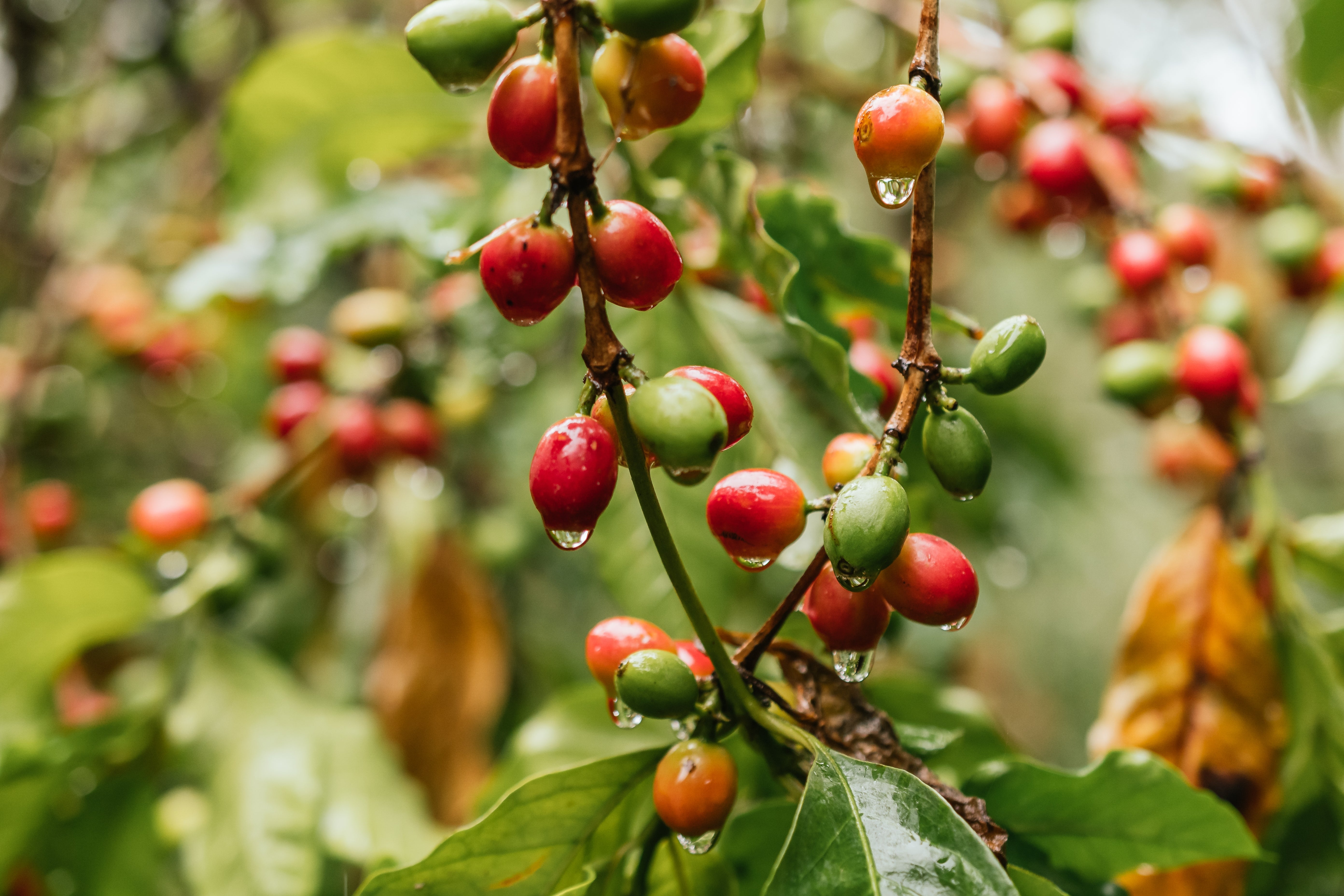
Here's why: At higher elevations, temperatures are cooler and daily temperature variation is greater - warm days and cold nights. Coffee cherries respond to this by developing more slowly. A cherry that takes longer to ripen builds more complex sugars, more nuanced acids, and more of the flavour compounds that make for an interesting cup. It's the same principle as slow-grown timber being denser - more time means more structure.

Coffees grown above approximately 1,500 metres tend to show brighter acidity, more complexity, and greater potential for floral and fruit-forward flavour notes. Coffees grown at lower altitudes tend toward heavier body, lower acidity, and simpler, earthier profiles - not inferior, just different. Brazil's famous chocolate and nut character is partly a product of its lower average growing altitude as well as its processing methods.

Altitude is a meaningful indicator of what to expect. This is why you'll see it listed on our product pages.

100 Green Beans AU

Temperature

Arabica coffee is comfortable in a fairly narrow temperature range - roughly 15°C to 24°C is commonly cited as the ideal growing window, though this can vary by variety and microclimate. Below that range, growth slows too much and frost risk increases. Above it, cherries ripen too quickly, which means less time to build complexity.

This temperature sensitivity is part of why altitude matters so much: in tropical regions near the equator, altitude is the primary mechanism for achieving the cooler temperatures Arabica needs. Without elevation, the heat at equatorial latitudes would be too intense for quality production.

It's also why climate change represents a genuine long-term threat to coffee production. As average temperatures rise, the viable growing altitude band shifts upward - and on any given mountain, there's only so much mountain left. Some producing regions are already feeling the pressure.

100 Green Beans AU

Rainfall and Seasonality

Coffee needs consistent rainfall - approximately 1,500 to 2,500 mm annually is a commonly cited range, though again this varies - but it also needs a defined dry season. The dry season is what triggers flowering, and the flowering cycle is what sets the harvest calendar. Without that dry period, the plant's growth cycle becomes irregular, and crop timing becomes unpredictable.

The relationship between wet and dry seasons also affects processing. In regions with reliable dry seasons and low humidity - parts of Brazil and Ethiopia - natural (dry) processing is practical because the cherries can be dried in the open air without risk of unwanted fermentation or mould. In more humid regions, washed processing is often favoured by producers to manage fermentation and mould risk. Processing choice also depends on infrastructure, tradition, water access and the flavour profile being targeted

Rainfall patterns also shape harvest windows, which is why coffee from different origins arrives at different times of year. Brazilian harvest typically runs from May through September. Central American origins tend to harvest from November through March. East African origins vary, with some countries - like Kenya - having two distinct cropping seasons due to their rainfall patterns. When we source new lots, harvest timing is part of what we're working with.

100 Green Beans AU

Soil

Volcanic soil is widely considered among the best for coffee production, and it's not a coincidence that many of the world's most celebrated coffee regions sit near volcanic activity. Volcanic soils are typically rich in minerals, well-draining, and slightly acidic - conditions that suit Arabica well. Costa Rica's Central Valley, Indonesia's Sumatra, and parts of Colombia all benefit from volcanic geology - as does much of Guatemala, though notably not Huehuetenango, which sits on a non-volcanic limestone and granite plateau and produces exceptional coffee regardless.

Soil drainage matters as much as mineral content. Coffee roots don't tolerate waterlogging - poorly draining soil leads to root disease and inconsistent development. Well-draining soils, particularly on slopes, allow excess water to move away while retaining enough moisture for steady growth.

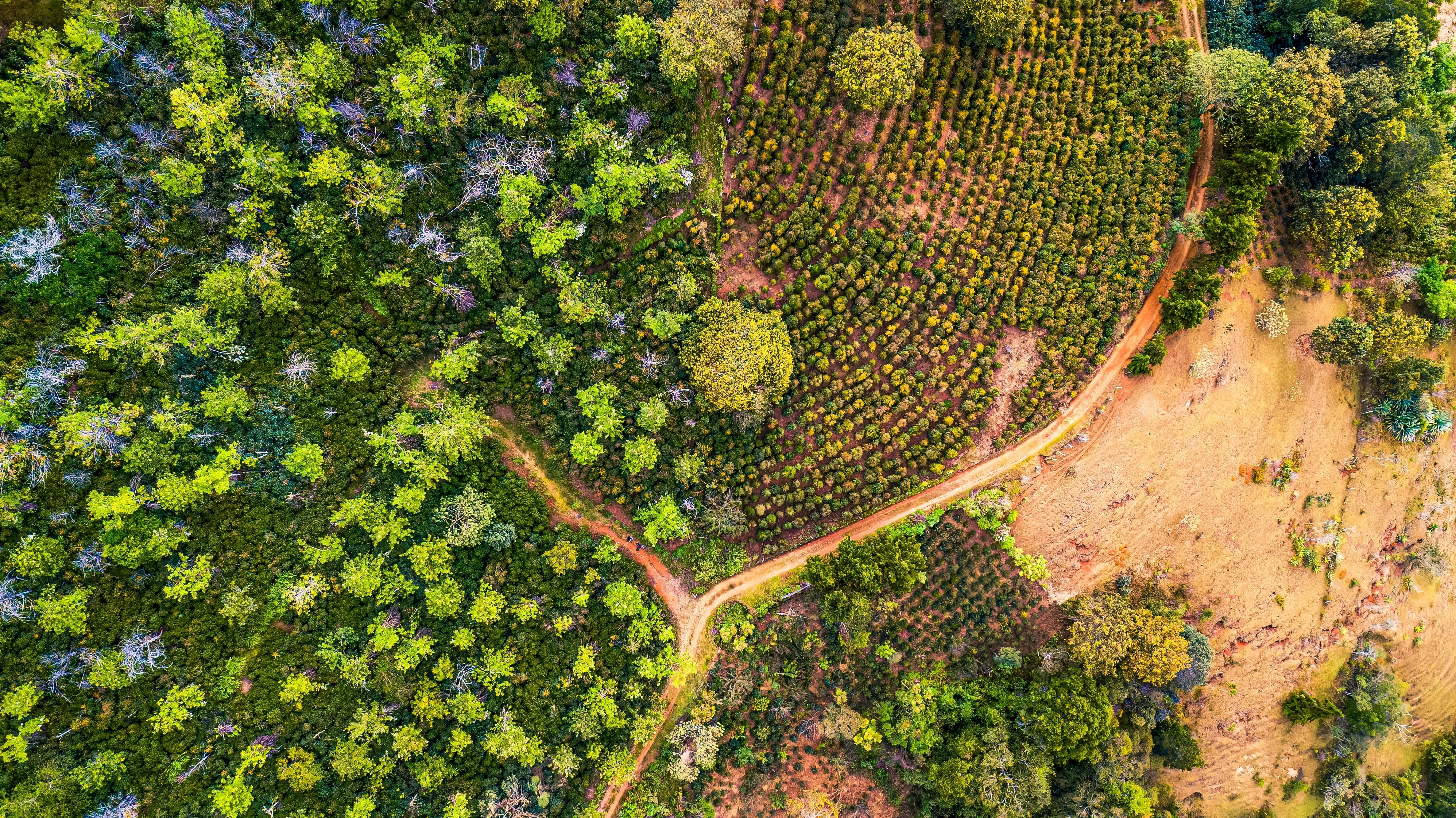
Shade cover - whether from forest canopy or deliberately planted shade trees - affects soil temperature and moisture retention and is associated with slower cherry development and better cup quality. Shade-grown coffee has become a quality and sustainability marker in specialty circles for this reason.

100 Green Beans AU

How This Connects To Your Roast

Knowing where a bean was grown, and at what altitude, gives you a useful starting point for how to approach it when roasting.

High-altitude beans with bright acidity and delicate floral or fruit notes reward a careful, controlled roast that preserves origin character - don't rush the development phase and consider stopping earlier than you might with a lower-grown bean. The complexity is there; your job is not to burn it off.

Lower-altitude beans with naturally heavier body and lower acidity are often more forgiving. They suit a slightly more developed roast and tend to hold up well to the longer development times that bring out sweetness and caramel character.

Every origin page on our site includes altitude information alongside flavour notes and processing method - because they're all part of the same story. The altitude tells you what the cherry had time to become, the processing tells you how it was handled, and the variety tells you what it started with. Put them together and you have a genuinely useful picture of what's sitting in your roaster.

100 Green Beans AU

The Bottom Line

Coffee is an agricultural product. It carries the character of the place it came from - the soil, the altitude, the rain, the temperature swings between day and night. It's chemistry, biology, and geography working together over months to produce something worth paying attention to.

When you buy green and roast at home, you're working directly with that raw material. No one has made the decisions for you yet. Understanding where the bean came from is what lets you make those decisions well.

Shop the Range

Explore our full range and buy your favourite green beans.

Shop Now