The reality of home roasting green coffee beans is based on one main fact: Coffee peaks in the week after it is roasted, and home roasting green coffee beans is the best way to make sure you never miss that window. By the time most supermarket bags reach you, they are already months past their best. The aroma has faded, the complexity has dulled, and what should be a vibrant, flavourful experience has become something flat and forgettable. Home roasting green coffee beans fixes that. It also hands you a kind of control most coffee drinkers never get to experience, over the bean, the roast, and how your coffee actually tastes in the cup. Once you start home roasting green coffee beans with your very own beans it is very hard to go back.
What Is Home Roasting?
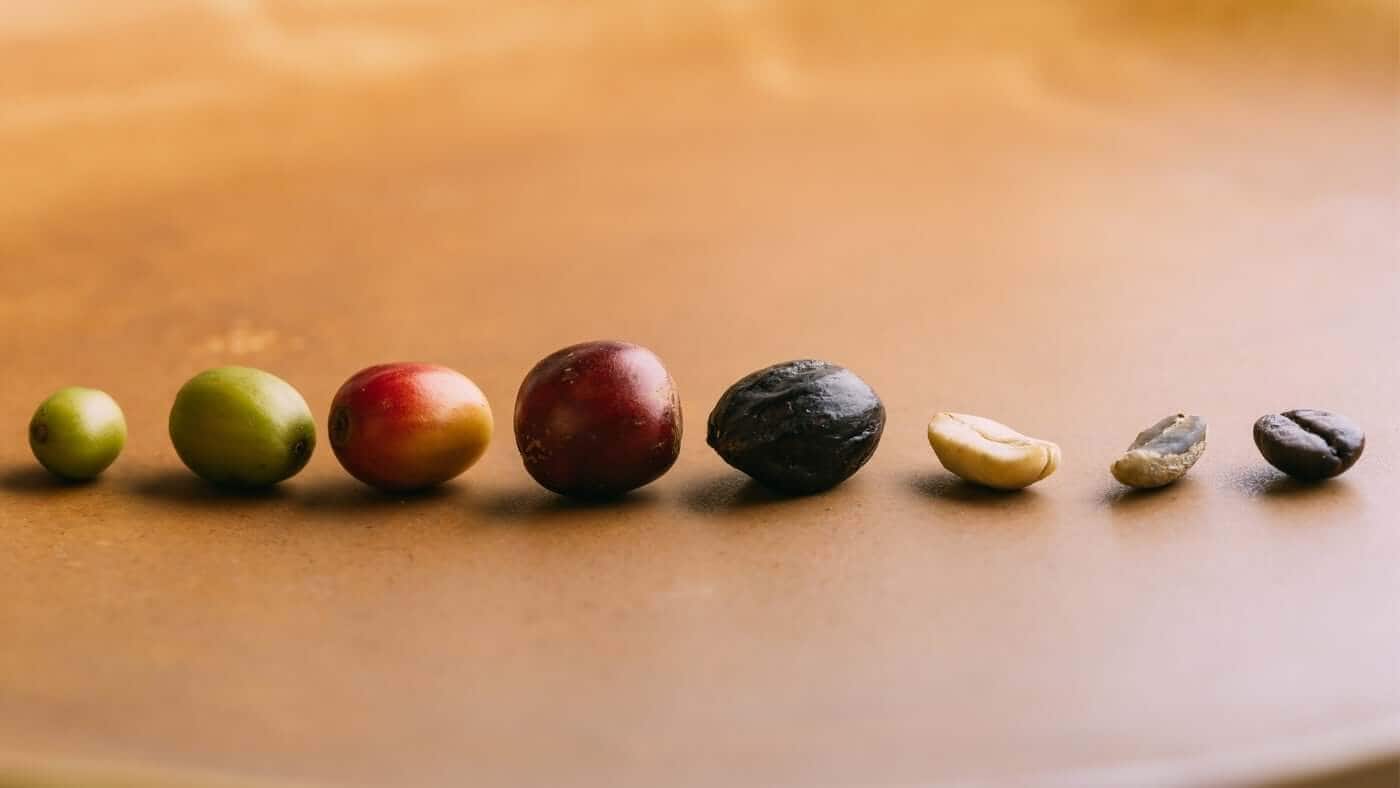
Home roasting green coffee beans is exactly what it sounds like. Instead of buying pre-roasted coffee, you buy green coffee beans in their raw, unroasted state and roast them yourself at home. The process transforms the pale, grassy green bean into the dark, aromatic bean you recognise, developing the sugars, acids, and flavour compounds that make coffee taste the way it does.
The difference in freshness is significant. Roasted coffee begins to stale within weeks as the compounds responsible for aroma and flavour oxidise and break down. Green coffee beans stored correctly can last from 12 months to several years, meaning you can buy in bulk, roast small batches as you need them, and always have coffee at its absolute peak. That is a standard of freshness that no supermarket shelf can compete with.
Beyond freshness, home roasting green coffee beans gives you something even more valuable: genuine control over your cup. The same green bean can taste like three completely different coffees depending on how far you take the roast. Understanding that is most of what you need to know to get started.
Light, Medium, Dark: Why Roast Level Matters
Roast level is one of the most important variables in how your coffee tastes. Pull the bean early and you preserve its natural origin character, the floral, fruity, tea-like qualities that come from where and how it was grown. Push it further and you start to develop sweetness, body, and chocolate notes. Go further still and roast character takes over entirely, bringing bold, smoky, bittersweet intensity.
Here is how the three benchmarks break down.
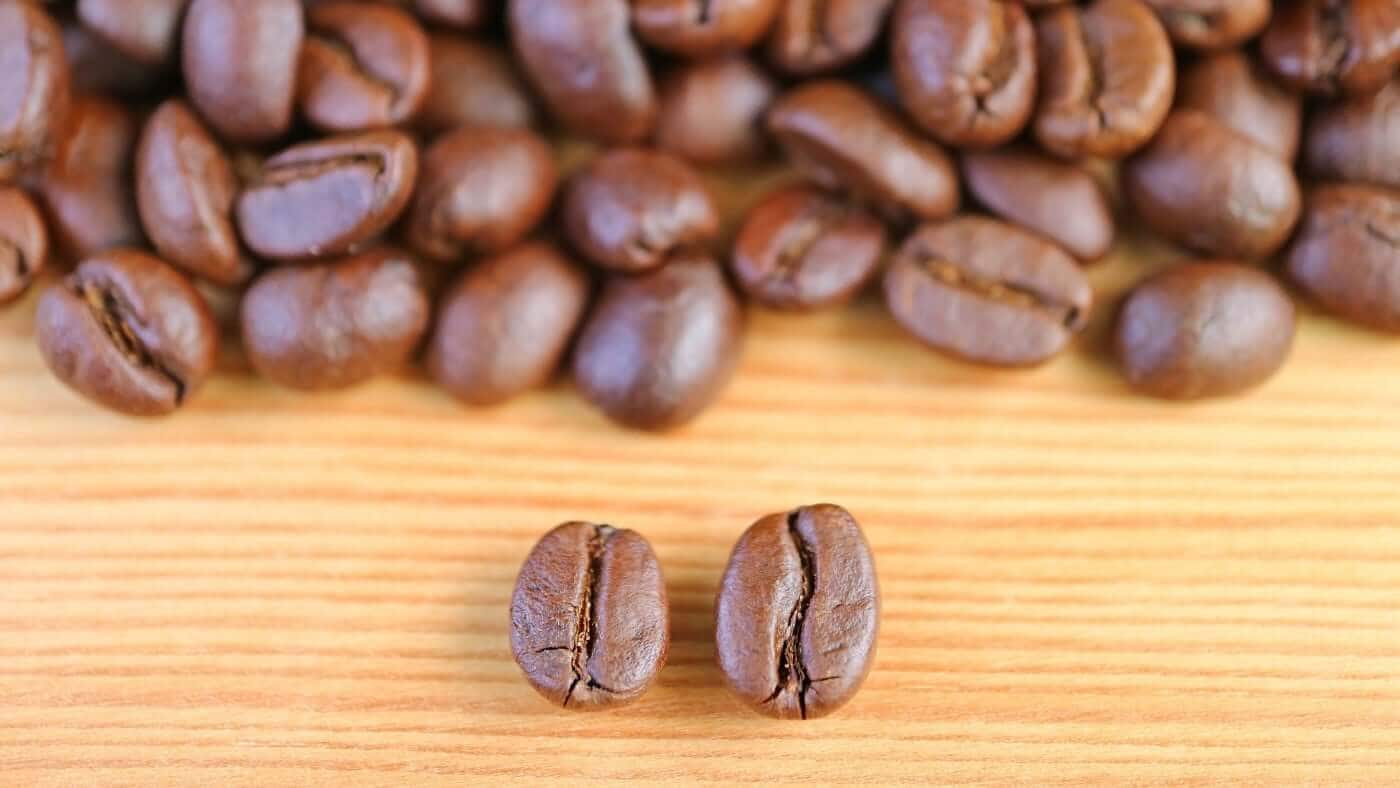
A light roast is pulled soon after first crack, the audible popping sound that signals the bean has reached a certain temperature. This is where acidity is brightest and origin character is most clearly expressed. Floral, fruity, citric, and tea-like notes come to the fore. This is the specialty coffee default and the roast level that best showcases what makes each origin unique.
A medium roast goes a touch further. Sweetness rounds out, body builds, and origin character is still clearly present in the cup. This is the most forgiving roast level and the easiest place to start for anyone new to home roasting green coffee beans. If you are not sure where to begin, start here.
A dark roast is taken into or past second crack. The cup becomes bolder, smokier, and more bittersweet. Origin character fades as roast character takes over. These beans hold up well with milk and suit people who prefer a more traditional, robust style of coffee.
Every green bean in our range comes with guidance on how it performs across all three roast levels. Understanding how a particular origin responds to heat is one of the most interesting parts of developing your skills as a home roaster.
You Do Not Need An Expensive Machine for Home Roasting Green Coffee Beans
One of the biggest misconceptions about home roasting green coffee beans is that you need specialist equipment to get started. You do not. People successfully roast great coffee using a surprisingly wide range of tools, and some of the best learning happens with the most basic setups.
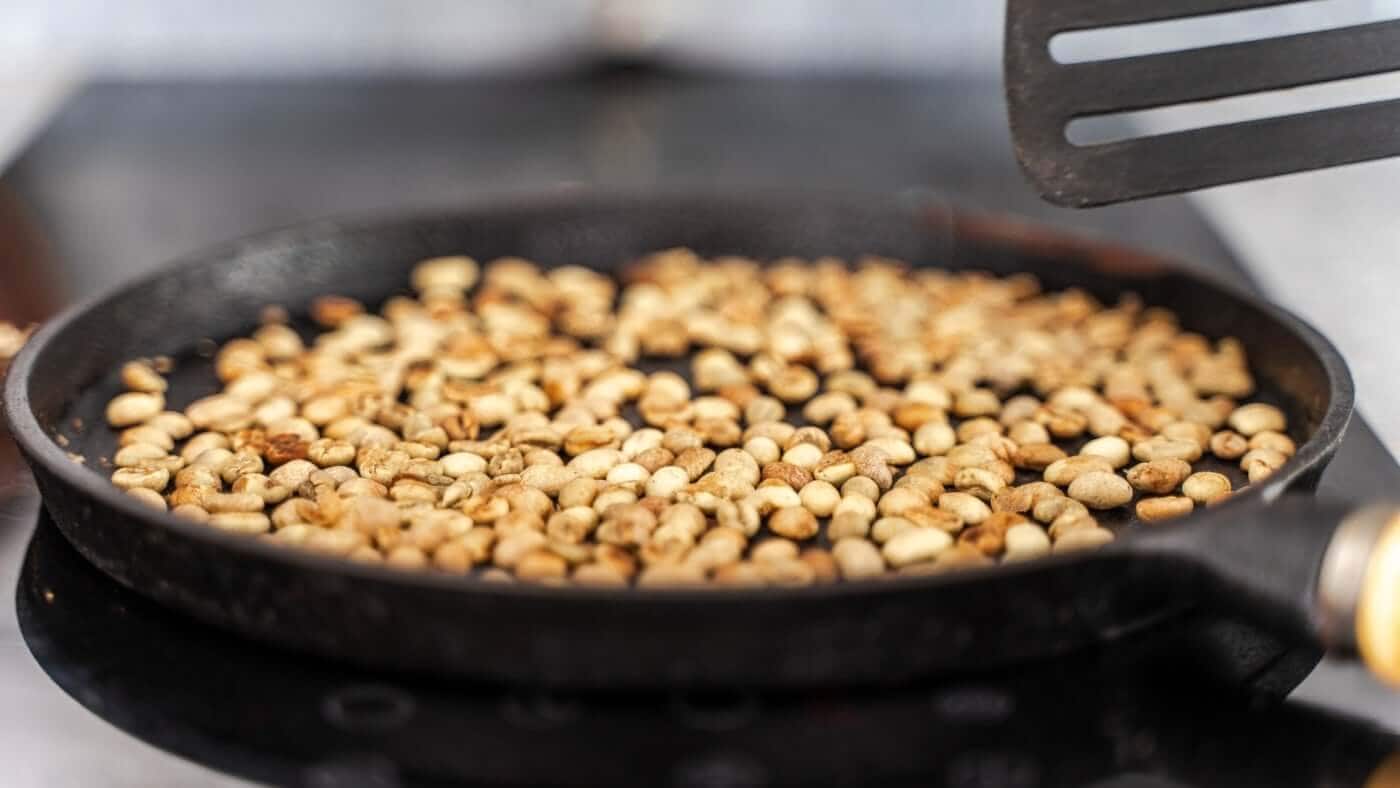
A stovetop pan or a repurposed popcorn machine is all you need to roast your first batch of green beans. These methods are hands on, inexpensive, and surprisingly effective. Batch to batch consistency can be rough, but as a way to learn what is actually happening to a bean during roasting there is nothing better. You will develop an instinct for colour, smell, and sound that serves you well no matter what equipment you move to later.
For anyone who wants to roast regularly without making it a project, a dedicated air roaster is the most practical step up. Machines like the Kaffelogic Nano 7 offer repeatable roast profiles, small batches of 50 to 120 grams, and low fuss operation. This is our default recommendation for home roasters who want consistency and convenience without a steep learning curve.
At the more serious end of the home roasting green coffee beans spectrum sit drum roasters. These offer larger batch sizes, greater control over the roast profile, and a depth of capability that suits roasters who want to go deep into the craft. The learning curve is steeper but the results can be exceptional.
If you are not sure which setup suits you best, get in touch. We are happy to point you in the right direction.
Your First Roast
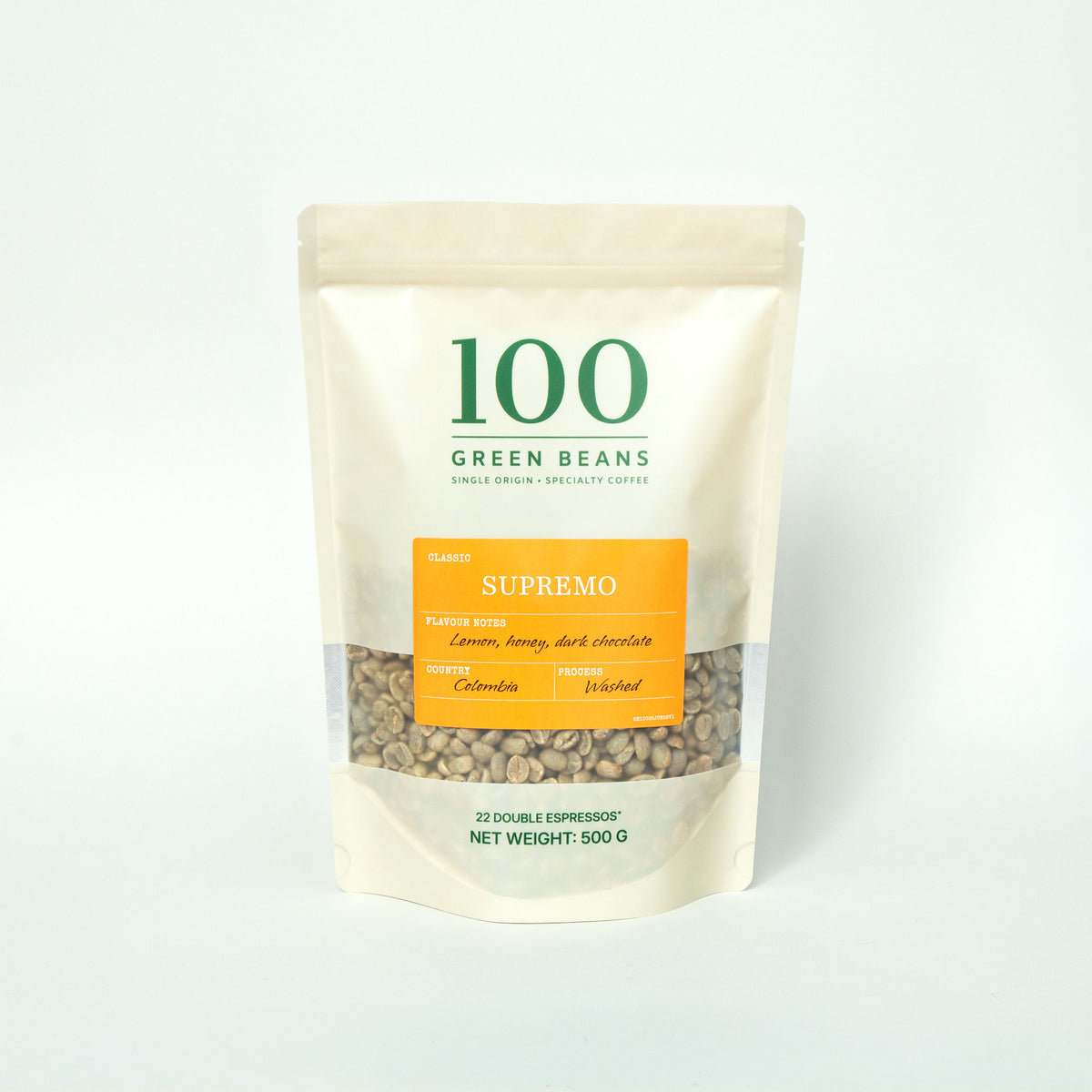
Starting simple is the best advice anyone can give a first time home roaster. Pick a forgiving, approachable green bean. Our Brazil Cerrado and Colombian Supremo are both excellent starting points, consistent, sweet, and well suited to a medium roast that is easy to dial in.
Aim for a medium roast on your first attempt. Once your beans are done, let them rest for at least 24 hours before grinding. This resting period allows carbon dioxide built up during roasting to escape and lets the flavour settle and develop. Then taste your coffee over the following week and pay attention to how it changes day by day.
Take a few notes as you go. Write down what you did, what you tasted, and what you would change next time. Your palate will catch up faster than you think, and those early notes become surprisingly valuable as your skills develop.
Going Deeper into Home Roasting Green Coffee Beans
Every origin in our range comes with detailed tasting notes across light, medium, and dark roast levels. Learning how different origins respond to heat is one of the great pleasures of home roasting green coffee beans, and understanding origin, altitude, processing methods, and flavour profiles is what separates a good roast from a great one.
The more you roast, the more you understand. And the more you understand, the better your coffee gets. At 100 Green Beans we have everything you need to get started and keep going. Browse our range of green coffee beans and roast your first batch today. Want to browse our range? Click here.